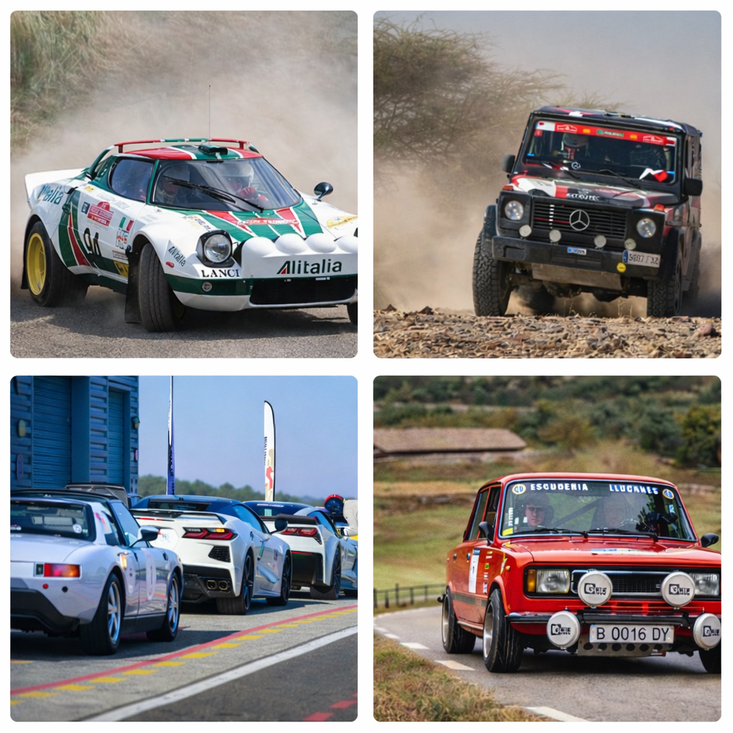
A world much larger than it seems
The world of classic cars is immense. And often, much richer than we imagine.
Many start with regularity on asphalt… but they stay here due to lack of knowledge, not due to lack of options. The reality is that there are many ways to experience a classic car: competing, traveling, navigating, or simply enjoying driving.
If you have ever asked yourself, “What more could I do with my classic car?”, this article is for you.
Regularity on asphalt: the starting point
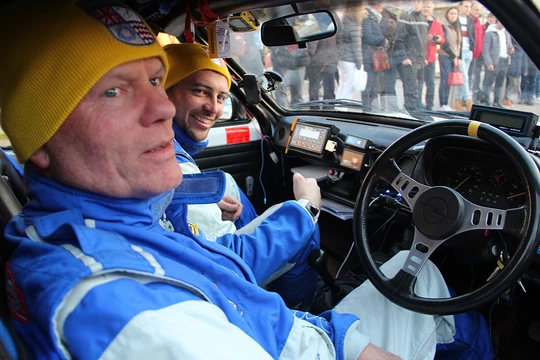
Open road: the school of regularity
It is the best-known discipline, and also the entry point for many teams.
Here the objective is to follow an imposed average speed, usually with a limit of 50 km/h, as the roads are open to traffic.
But the real difficulty depends greatly on each organization:
- Sections with unannounced average changes
- Tests where times have to e the same between "mile markers"
- Roadbooks with demanding layouts where not getting lost is key
- Long sections of 30 or 40 km that test consistency
- Nocturnal tests where driving and co-driving gain prominence
In Spain and Portugal, there is a wide variety of rallies of this type, organized by clubs, teams, and large organizations.
Each rally has its style. And this “personal touch” is part of the diversity.
Closed road: driving and regularity to the limit
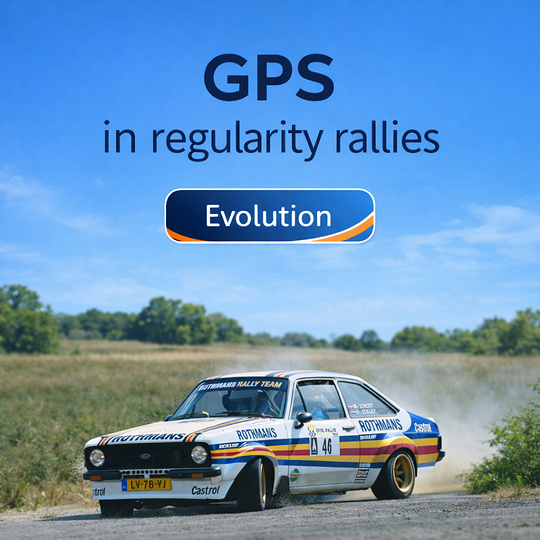
When the roads close, the sporting level rises.
The speed increases and varies depending on the country, the category, and the safety of the vehicle. It’s no longer just about following an average, but doing it well by taking advantage of every meter and working as a team.
Here regularity is not just about following an average:
- You need to match meters with the layout
- The co-driver tells speed notes to help optimize driving
- Skill at the wheel is crucial
These types of tests involve significant organization:
- Close the road to trafiic
- Commissioners and safety
- Radio communications
- GPS tracking
- Medical assistance
The navigation factor is less important, and the following gain importance:
- Pre-events reconnaissance
- Car preparation
- The driver-co-driver teamwork
The level rises for the car, for the driver, and for the co-driver, but the satisfaction multiplies.
Familiar names: VHRS, VHR (France), Regularidad Sport, Regularidad Super Sport. (Spain)
When the asphalt ends: regularity off-road
raids and navigation: adventure in pure state
If you are looking for adventure, this is your field.
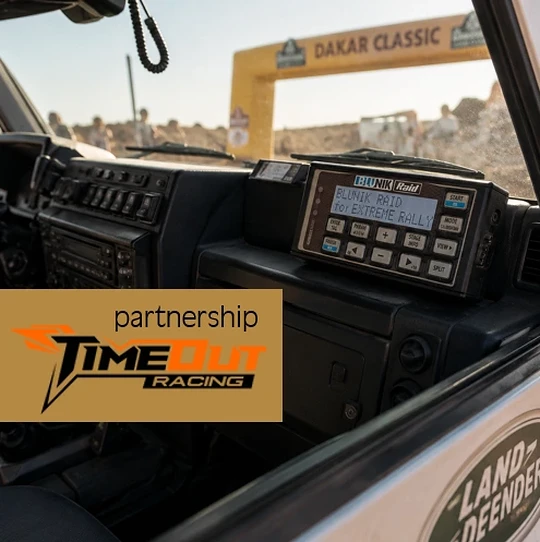
In recent years, the variety in raids has grown, and in their evolution, some have incorporated regularity tests. Always with the extra ingredient of real navigation.
Here concepts such as the following come into play:
- Interpreting the roadbook accurately
- Following bearings (CAP) when the tracks are not visible
- Validating waypoints in areas without clear references
This is common in environments such as deserts or open tracks.
This turns the test into a combination of:
- Regularity
- Navigation
- Decision-making capacity
It's not just about following an average. It's knowing where you are, where you are going, and how to get there.
The result? An intense, demanding, and absolutely unforgettable experience.
Regularity on tracks: the perfect balance
There are also “classic” tests on off-road tracks, where regularity is similar to that of asphalt on open roads.
But with an added factor: the extreme terrain.
Traction, visibility, and the state of the path make each section different. It is a great school to improve sensitivity and adaptability. Likely for future raids with regularity.
Regularity on circuit
The circuits offer a different, yet very useful environment.
Here the goal is to repeat the same time lap after lap. It seems easy but it is not.
Depending on the test, the time can be free or adapted to the year or category of the vehicle.
The challenge is absolute consistency:
- Maintain pace
- Avoid mistakes
- Adjust each lap
It is a great school to work on driving and concentration, in a controlled environment.
Traveling is also competing: regularity and tourism
Some want to compete. And some want to live the car experience.
Tourism regularity events combine:
- Spectacular routes and meticulous organization of all details.
- Selected hotels.
- Gastronomy
- And regularity sections on open roads
It is a different way of understanding rallies: less pressure, but with the same spirit. And a good way to discover splendid routes and magnificent views while competing on remote roads that are difficult to find again.
Perfect for sharing with partners or friends, without giving up the passion for cars.
The original spirit: classic regularity
Here history breathes.
In countries such as Belgium, classic regularity keeps the spirit of the origins alive:
- Original classic cars.
- Limited instruments
- Paper tables
- Manual stopwatches
The co-driver calculates again, interprets data, and anticipates.
The organization provides tables with distances every 100 meters and corresponding passing times.
It is demanding. But it is also authentic.
Ideal for those who want a pure, unfiltered experience.
The extreme precision: regularity on “rubber”
Italy is the key reference for this format, also present in some rallies in Germany.
These are very short tests, usually between 500 meters and 2 km, with a very precise speed.
The challenge is:
- Passing exactly through the marked point (“the rubber”)
- At the exact moment (down to the tenth or hundredth of a second)
And the challenge does not end here, the tests follow one another. Here is where part of the technique of finishing the stopwatch right where another starts lies.
Concentration, precision, and practice, a lot of practice.
Regularity on the road in Argentina
In Argentina, regularity adopts a very particular format.
The system is based on:
- Passing times marked in certain points of the roadbook
- From these times, the co-driver calculates the average to follow
- Aim to meet all the marked times.
However, there is a differential element; the roadbook may indicate to gain or lose seconds with respect to the ideal time. This forces constant adjustments to the strategy.
Another unique aspect is the timing - It is the co-driver who makes the time recording at the indicated points.
A good combination of road-book points, timings, and chrono.
Conclusion
The world of classic cars is as big as your desire to enjoy it.
There is not a single way to experience a rally. There is yours.
From the purest regularity to desert adventure, each discipline teaches you something new. And they all have one thing in common: passion.
If you want to start or try a new discipline, we make it easy for you:
- Discover the calendar with the recommended rallies
- Choose tests with good organization and proven experience
- And get ready to enjoy to the fullest
Check our rally calendar:
https://www.blunik.com/eng/racing/rally/calendar-rallies.html